There is no darkness like the darkness of the African savanna far from any city. The sky here is not black but a deep indigo, crowded with more stars than a lifetime of northern European skies could show you. On my first night in Amboseli, lying on my back on a sleeping mat outside the tent, I understood immediately why this continent has always been the axis of the human imagination.
But I had come to photograph, not to philosophise — and the photographic opportunities of the East African grasslands are among the richest in the world. This is a report from three weeks across Kenya and Tanzania, from the elephants of Amboseli to the great migration corridor of the Serengeti.
Astrophotography on the Savanna
The Milky Way over the African savanna is a cliché for good reason — it is genuinely one of the most spectacular night skies available to photographers. The combination of latitude (5–10 degrees south of the equator), minimal light pollution, and the silhouette opportunities provided by acacia trees and the occasional giraffe creates conditions that astrophotographers travel across the world to experience.
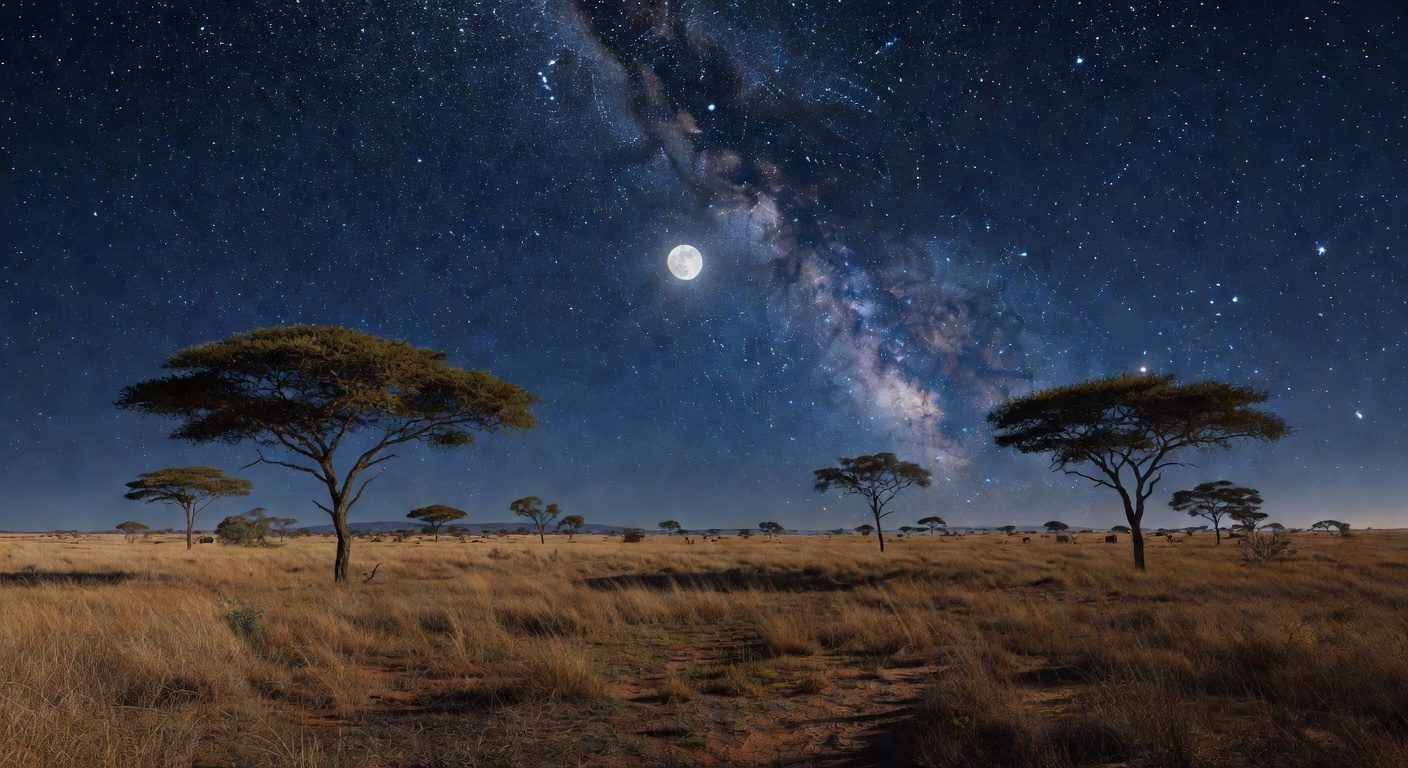
The key challenge is timing. The Milky Way core is visible from the southern hemisphere from April through October, with the galactic centre positioned most favourably between July and September. I was shooting in late February, which meant the galactic core was not visible, but the sheer density of stars in the rest of the sky — combined with the Magellanic Clouds visible to the south — more than compensated.
"Wildlife photography teaches you that the best shot is rarely the one you planned. It arrives in the moment between moments, when an elephant lifts its head and catches the last light of the day."
Dawn on the Serengeti
Nothing prepares you for the scale of the Serengeti. The name means "endless plains" in Maa, the language of the Maasai, and it is accurate — the grasslands extend to every horizon, interrupted only by the occasional kopje (rocky outcrop) and the distant blue line of the Ngorongoro Highlands.
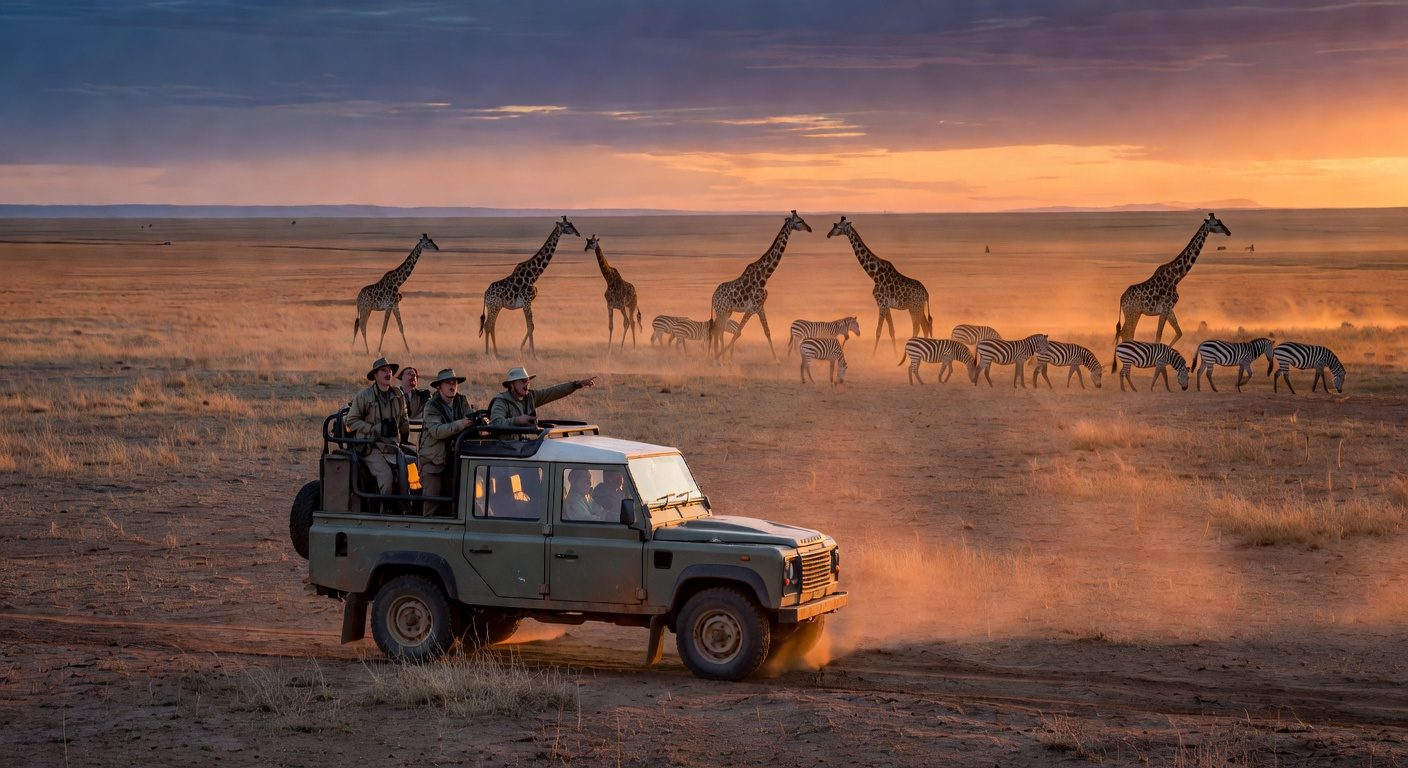
The giraffes at dawn are one of the defining images of African wildlife photography. Their extraordinary height means they receive the first light of the day before almost any other animal — they glow amber while the plains below are still in shadow, creating a natural separation between subject and background that photographers spend years trying to achieve artificially in other contexts.
📷 African Safari Photography Tips
- A 400–600mm telephoto is essential for wildlife — image stabilisation is critical in moving vehicles
- Bean bags are better than tripods in a safari vehicle — they conform to the window ledge perfectly
- Shoot at eye level with animals whenever possible — ask your guide to position the vehicle accordingly
- For astrophotography, camp sites far from lodges offer dramatically darker skies
- Golden hour is 45 minutes — be in position before the light arrives, not during it
- Elephant photography requires patience — wait for natural compositions, avoid forced framing
- High ISO performance is critical — choose a body with excellent ISO 3200–12800 quality
The Elephants of Amboseli
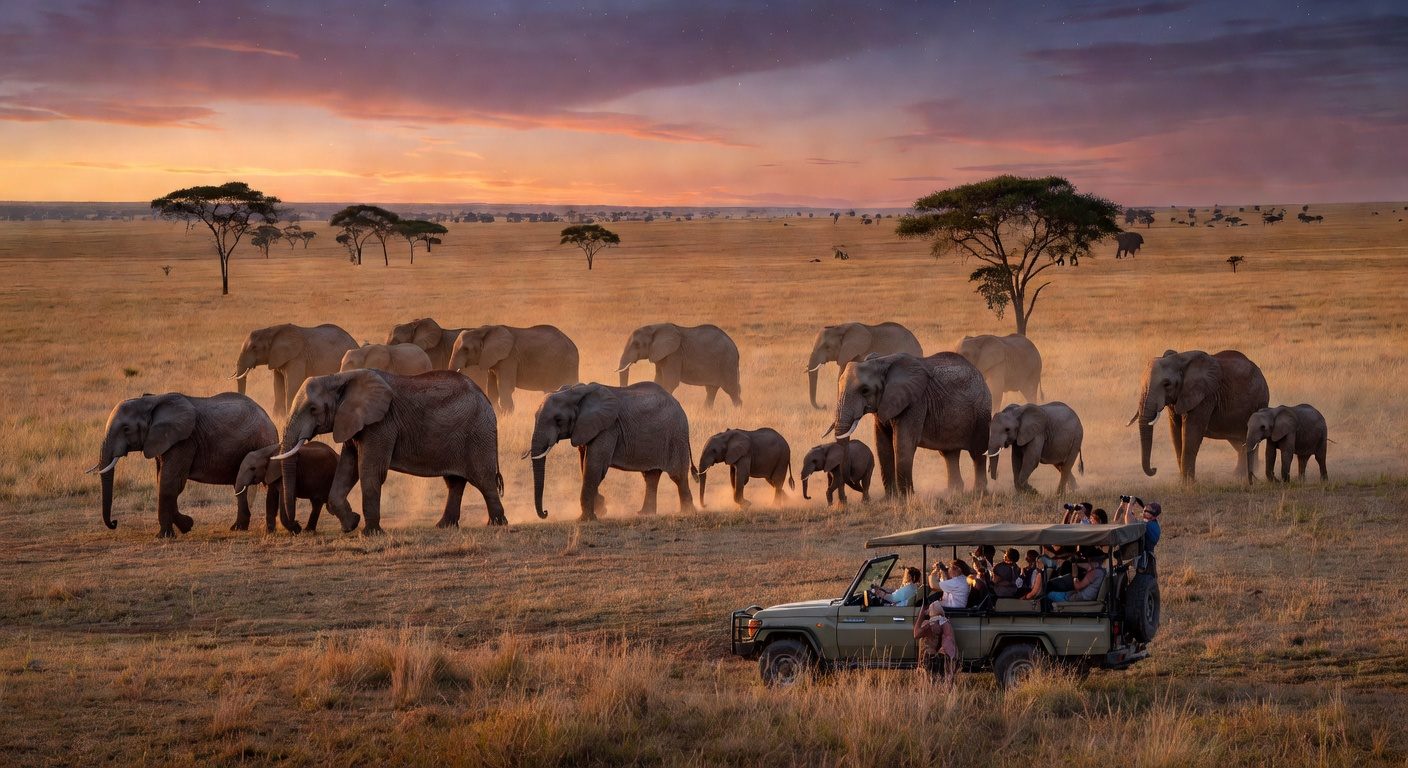
Amboseli National Park in Kenya hosts one of the best-studied elephant populations in the world — the families here have been observed continuously since the 1970s, and individual animals have names and documented histories. This intimacy between researchers and animals means the elephants have lost their fear of vehicles, allowing approaches that would be impossible elsewhere.
On my final afternoon, I positioned the Land Cruiser 200 metres from a herd of eighteen elephants moving towards a water source. The light was perfect — amber and low, casting six-metre shadows across the dry grass — and for forty minutes I had access to a scene that I will spend the rest of my photographic career trying to surpass.