Tokyo is the city where I grew up, and it is also the city where I first understood what street photography means. The contradiction between its scale — 14 million people in the metropolitan area — and the extraordinary intimacy it offers to the wandering photographer is one of the great paradoxes of urban life. You can be entirely alone at 2 AM in Shinjuku, surrounded by lights that illuminate every surface, and still feel that the city is performing specifically for your camera.
This journal covers five nights of street photography across Tokyo's most visually intense districts — Shinjuku, Shibuya, Akihabara, Harajuku, and the quieter but equally photogenic backstreets of Yanaka. I shot primarily at night, which is when Tokyo reveals its most extraordinary visual vocabulary.
Shinjuku in the Rain
Rain transforms Tokyo street photography. The city's ubiquitous signage and neon advertising — normally just visual noise in daylight — becomes compositional material of extraordinary richness when reflected in wet pavement. Every puddle is a second canvas. Every rain-polished surface multiplies the colour palette available in any given frame.
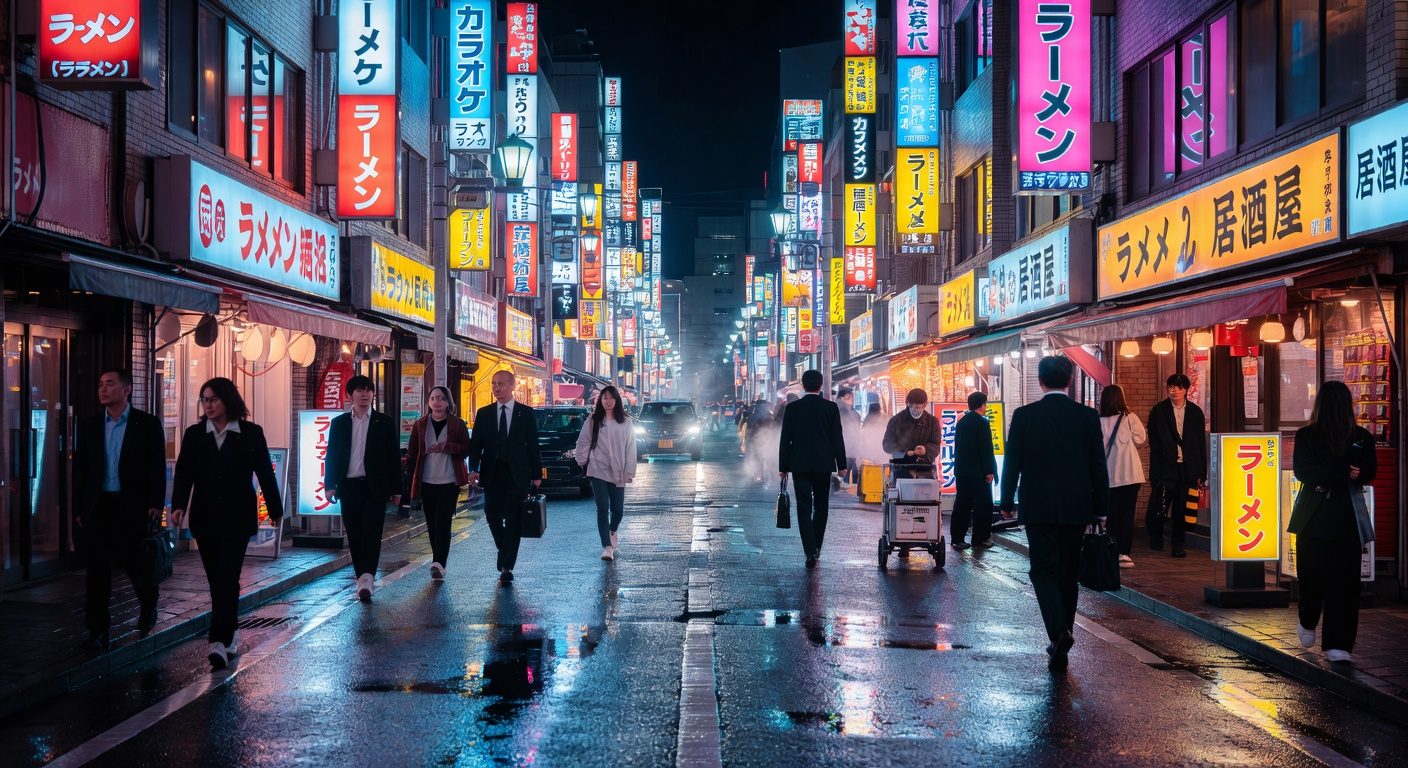
The technique for rainy night street photography is specific: I work at ISO 3200–6400, shoot wide open at f/1.8–f/2.8, and keep shutter speed between 1/30s and 1/60s to retain some motion blur in pedestrians while keeping the background neon sharp. The Fujifilm X100VI's exceptional high-ISO performance makes it my preferred camera for this work — its compact size also prevents the wariness that a large mirrorless and lens combination can generate in subjects.
"In Tokyo, the distinction between subject and background dissolves entirely at night. The city becomes one continuous composition — layered, luminous, and perpetually changing."
Bangkok: A Different Kind of Night
From Tokyo I flew to Bangkok for a week, and the contrast was instructive. Where Tokyo is controlled and vertical, Bangkok is chaotic and horizontal — its night markets spread outwards rather than upwards, and the photography requires a fundamentally different approach: wider angles, closer proximity, and a willingness to be engulfed rather than to observe from a distance.
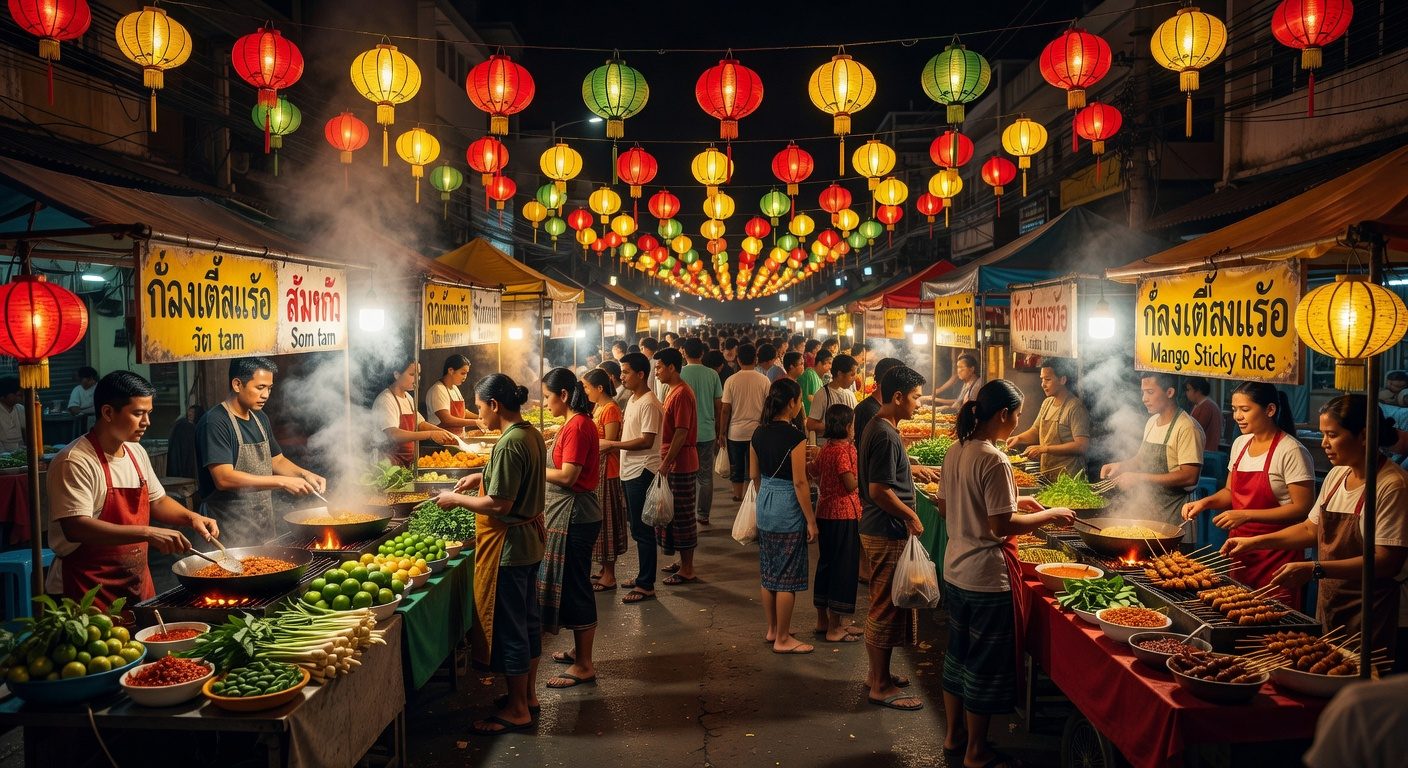
The floating lantern markets of Bangkok are among the most photographically challenging environments I've encountered — the contrast between the bright lantern flames and the surrounding darkness spans eight stops or more, and managing this range while preserving the warm, luminous quality of the light requires careful RAW processing and exposure decisions.
📷 Night Street Photography — Key Settings
- ISO 3200–6400 on modern full-frame or APS-C sensors is entirely acceptable for street work
- Shoot wide open (f/1.4–f/2.8) — shallow depth of field isolates subjects from background noise
- 1/30s to 1/60s shutter — slower than instinct suggests, but essential for ambient light capture
- Use back-button focus and continuous AF for moving subjects in low light
- Shoot in RAW — shadow recovery is essential in high-contrast night environments
- Prime lenses outperform zooms in low light — consider a 35mm f/1.4 as your primary night lens
Berlin: Urban Decay and Street Art
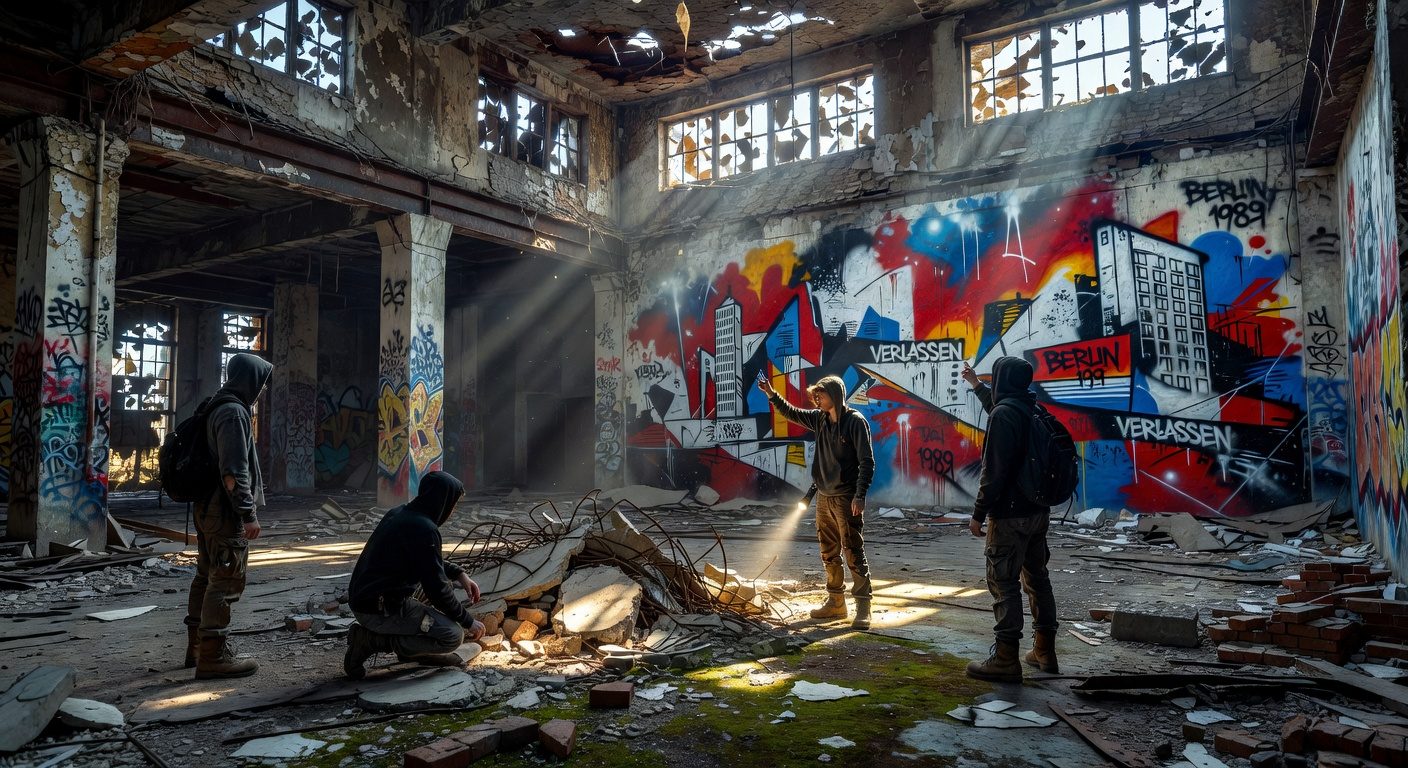
The final chapter of this Asia-to-Europe comparative survey took me to Berlin, which offers a completely different visual vocabulary again — the scarred, layered history of the city is visible in its walls, its vacant lots, and its extraordinary street art scene. The abandoned industrial districts of Kreuzberg and Neukölln provide a canvas for photographers that is unique in Europe.
The photography here demands patience rather than speed — finding compositions within the chaos of graffiti and ruin requires a careful eye and a willingness to simplify. The best images I made in Berlin were close studies of individual elements: a single painted figure, a fragment of tile, a window frame revealing darkness within. Small truths extracted from an overwhelming visual environment.